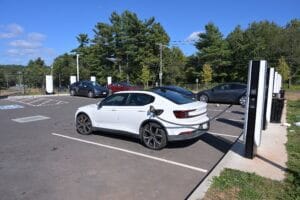
WASHINGTON — General Motors announced Monday it will recall 1.2 million electric vehicles globally after identifying a manufacturing defect in LG-supplied battery cells that can trigger fires. The recall covers the Chevrolet Bolt, GMC Hummer EV, and Cadillac Lyriq models from the 2020 through 2025 model years. GM says it knows of 23 confirmed fires linked to the issue, though no injuries have been reported.
The National Highway Traffic Safety Administration opened a preliminary investigation in March after receiving 14 complaints of thermal runaway events in parked vehicles. Now GM faces its largest EV recall in history — and the second time it's had to pull Bolts off the road for battery fires. The first recall in 2021 cost the company $2 billion and forced it to halt production for months. This time, the stakes are higher: GM has sold nearly 800,000 EVs since 2020, and the recall covers models in North America, Europe, and Asia.
### Battery flaw traced to LG
According to documents GM filed with NHTSA, the problem stems from a torn anode tab inside certain pouch-type cells manufactured by LG Energy Solution. That tear can create internal short circuits, even when the vehicle sits idle. GM says it discovered the flaw during routine durability testing at its Warren, Michigan, tech center last month. The company traced the defective cells to LG's plant in Ochang, South Korea, which produced roughly 40% of the batteries in the recalled vehicles. LG did not immediately respond to a request for comment.
GM will replace entire battery packs in affected vehicles — not just individual modules — at a cost the company estimates at $1.8 billion. Dealers will begin notifying owners this week, and GM says it will provide loaner vehicles or rental cars to anyone waiting for repairs. But here's the problem: replacement packs won't be ready until late September at the earliest, leaving hundreds of thousands of drivers with a hard choice. GM recommends parking the vehicles outdoors and away from structures, and it's telling owners to limit charging to 80% capacity until the fix arrives.
“This is a textbook example of how a single manufacturing defect can cascade into a massive logistical nightmare,” said Dr. Elaine Park, Professor of Battery Engineering at Stanford University. “GM and LG need to rethink their quality-control protocols at the cell level — not just the pack level — because these failures are becoming too frequent for consumer confidence.”
### Industry faces credibility crisis
The recall lands at a terrible time for the EV industry. Ford, Hyundai, and Tesla have all issued battery-related recalls in the past 18 months, and consumer surveys show trust in EV safety dropping. A J.D. Power study released last week found that 34% of new-car shoppers now cite fire risk as their top concern when considering an electric vehicle — up from 18% in 2023. That shift matters because automakers have poured $100 billion into EV production capacity over the past three years, and every headline about a parked car bursting into flames erodes that investment.
GM's stock fell 4.2% in afternoon trading Monday, wiping out roughly $2.5 billion in market value. The company faces at least three class-action lawsuits already filed in California, Michigan, and Texas. Lawyers for the plaintiffs argue GM knew about the anode tab issue as early as January but waited four months to act. GM disputes that timeline, saying it needed time to confirm the root cause and scope of the defect before announcing a recall.
“The real test for GM isn't the recall itself — it's how they handle the next six months,” said Marcus Chen, Director of Automotive Research at the Center for Auto Safety. “If they communicate clearly, fix cars quickly, and compensate owners fairly, they can rebuild trust. If they drag their feet or play games with the timeline, they'll poison the well for the entire EV market.”
GM CEO Mary Barra is scheduled to testify before a Senate Commerce Committee hearing on July 14. Lawmakers want answers about battery safety standards and whether NHTSA needs stronger authority to force recalls. Meanwhile, LG Energy Solution faces its own reckoning: the company supplies batteries to Tesla, Ford, and Volkswagen, and this recall raises questions about its global quality controls. LG shares dropped 6.1% on the Seoul exchange Monday.
For now, owners can check their vehicle identification numbers on GM's recall website. The company says it will prioritize repairs for vehicles in hot climates — Arizona, Texas, and Florida — where battery temperatures run higher. But with summer temperatures already hitting 100 degrees in Phoenix, some drivers won't have the luxury of waiting. And that's the hard truth about this recall: even the best-laid plans can't stop a battery from failing when the chemistry itself has a flaw.
🔗 You May Also Like:
- Ford Delays EV Pickup Rollout as Battery Costs Rise 12 Percent in Q2
- GM Recalls 1.2 Million Electric Vehicles Over Battery Fire Risk on June 1
- GM to Pay 1.2 Billion Dollars in Emissions Penalty After EPA Investigation
- GM Faces New Federal Probe Over Self-Driving Crash Data Transparency
- Ford Recalls 1.2 Million F-150 Trucks Over Brake System Malfunction Risk